A home is a sum of spaces that respond to different moments, rhythms, and needs. Together with Ana Feijoo, we have shaped three essential environments in her home: the kitchen, the main bathroom and the children’s bathroom. Three everyday settings that share the same approach: design meant to be lived in.
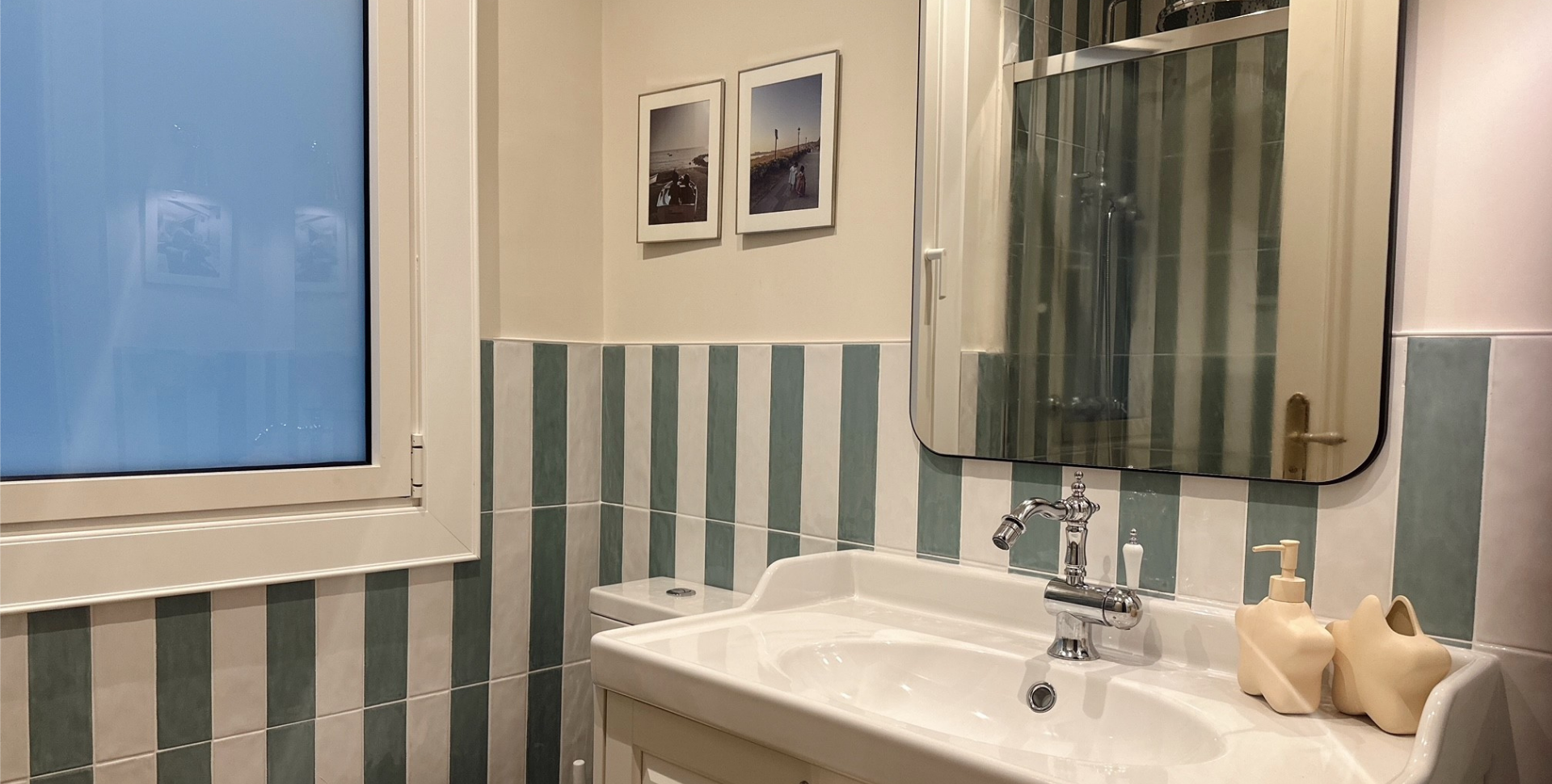
In the children’s bathroom, Ana chose the Clasic collection, a line that reinterprets traditional aesthetics through a contemporary perspective. Its balance between timeless character and modern functionality fits especially well in a space designed to accompany the growth, independence and daily routines of the youngest members of the family.
Designing for children means anticipating movement, repeated use and change over time. It involves finding the precise balance between ergonomics, durability and visual coherence. In this project, every decision reflects a clear intention: creating a safe and practical environment without giving up a defined aesthetic identity.
We spoke with Ana about how she imagined this bathroom and the role the Clasic taps play within a space designed to last and adapt.
If we focus on the children’s bathroom, what vision did you have for this space before starting the project?
From the beginning I wanted it to be a cheerful, bright bathroom with personality, but without becoming overly childish or temporary. I was looking for a space that could grow with my children — something that feels fun and functional today, but that will still make aesthetic sense in a few years. That’s why I thought of a timeless base, like blue and white ceramic with that coastal feel I love so much, and then building the rest from there.
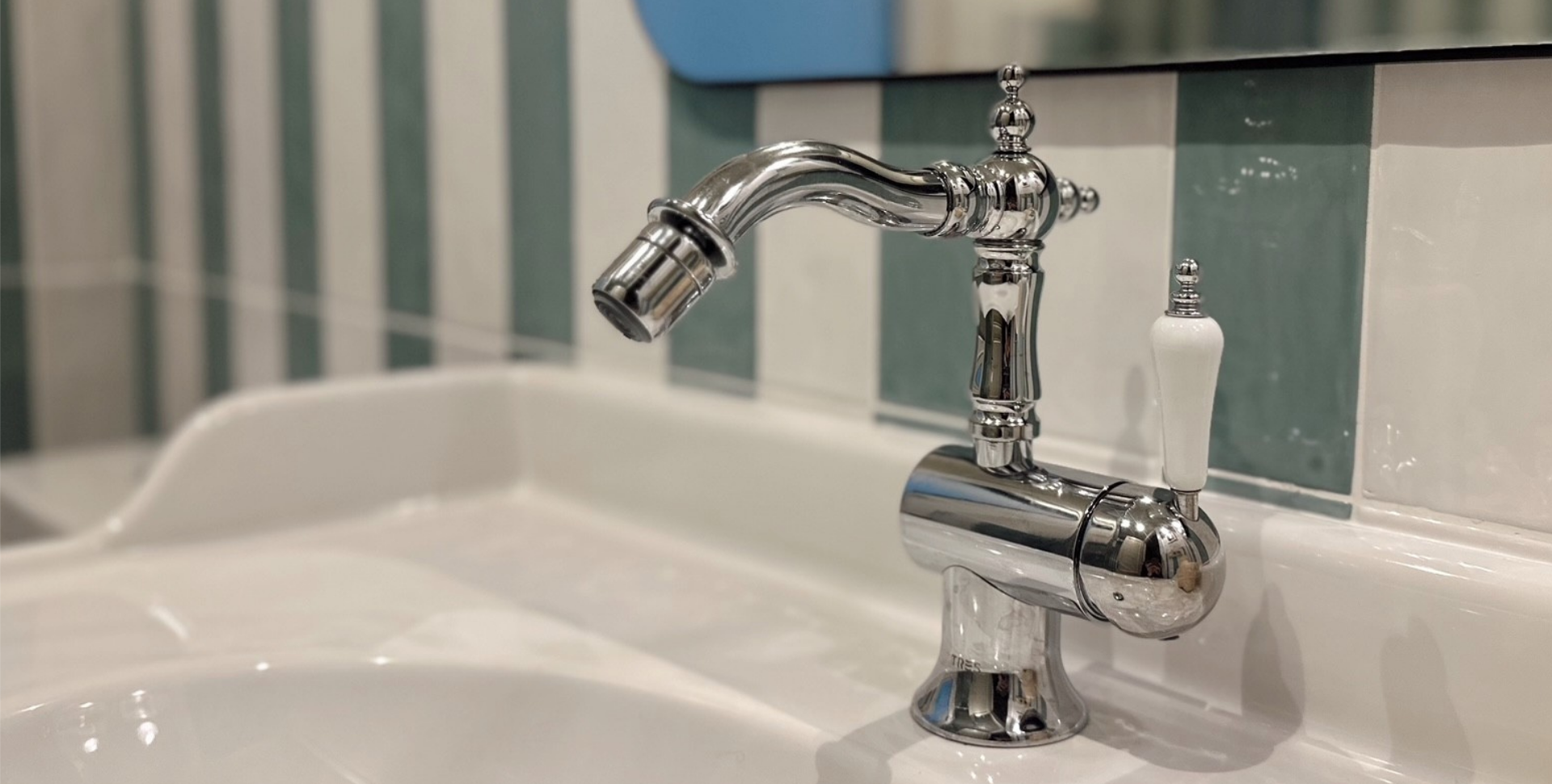
What led you to choose the Clasic collection for this children’s bathroom? What attracted you about its aesthetics and character?
I was drawn to its balance. The Clasic collection has that reinterpreted classic line that conveys elegance without feeling rigid. I like that it has character, but doesn’t compete with the other elements — it complements them.
When you imagined your children using it every day, what aspects were priorities in the design?
Functionality was key. I thought about ease of use, about them being able to handle the taps comfortably, about the durability of the materials and safety. I also considered organisation — making sure everything has its place to encourage independence. But I didn’t want to give up design; I believe children also deserve to grow up in spaces that are thoughtfully designed and aesthetically pleasing.
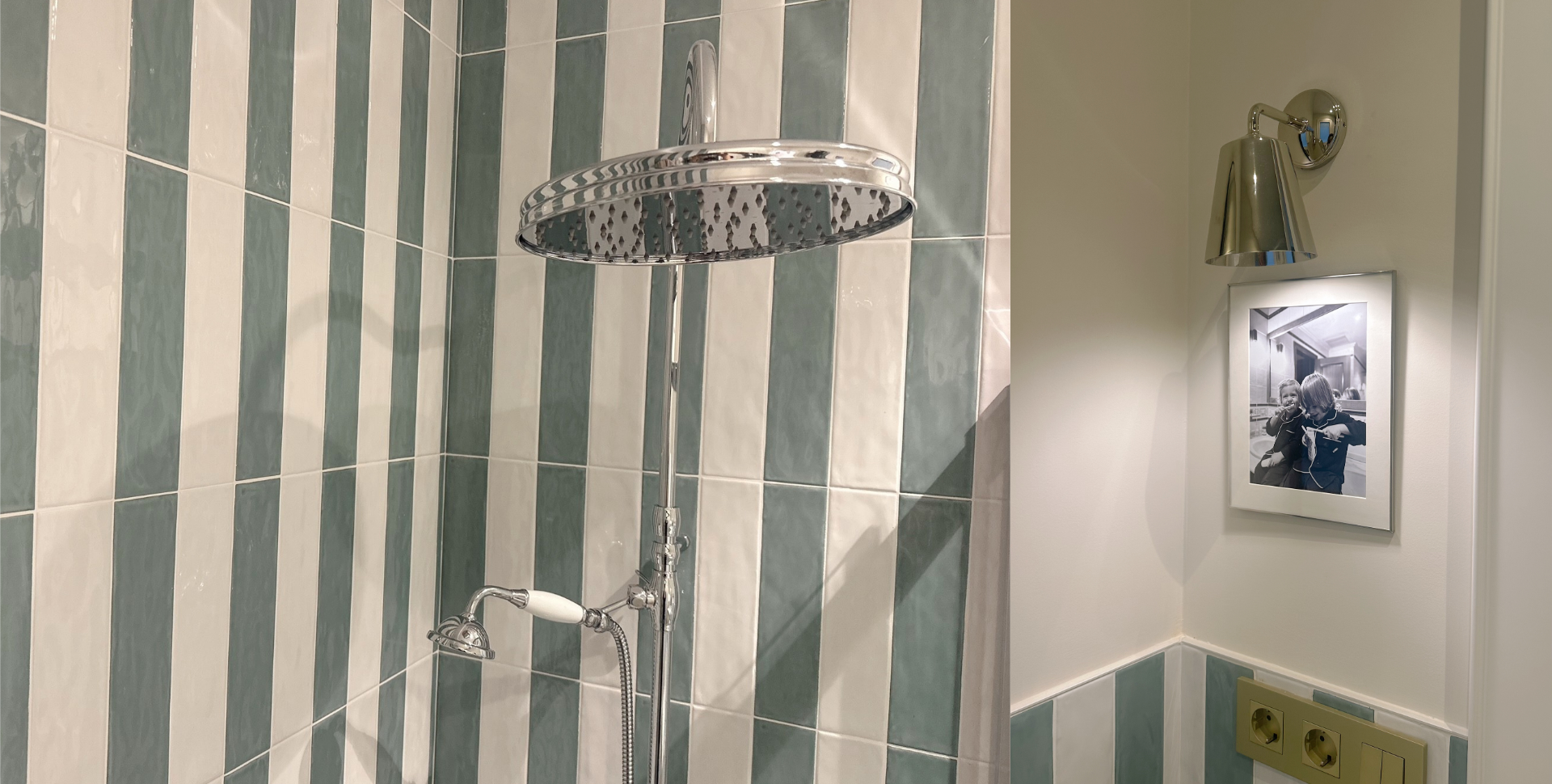
Clasic has a strong and timeless personality. What does this collection bring to the identity of the bathroom?
It brings coherence and sophistication. Even though it’s a children’s bathroom, it doesn’t lose elegance. The collection gives it that timeless quality that balances the fresh blue-and-white atmosphere and prevents the space from feeling temporary. It’s a solid base that allows the decoration to evolve over time without needing to change the essentials.
How can safety, functionality and a distinctive aesthetic be balanced in a space designed for children?
I think the key lies in choosing the main elements carefully. If you opt for durable materials, safe systems and brands with experience, you already have a big part of the work done. From there, design is not an addition but part of the concept. When pieces combine technical quality with good aesthetics, you don’t have to sacrifice one for the other.
If other families were planning a children’s bathroom, how important would you say it is to choose taps with design and quality meant to last?
I would say it’s extremely important. Taps are used constantly and experience a lot of wear. Choosing a collection with both design and quality is not only an aesthetic decision but also a practical and sustainable one. It means investing in durability, safety and long-term visual coherence. In the end, what you choose today can accompany your children for many years.