Chrome plating is no longer just an aesthetic matter. In a context shaped by regulatory evolution, industrial safety and sustainability, the shift from hexavalent chromium to trivalent chromium represents a key transformation for architects, engineering firms, developers and specification professionals.
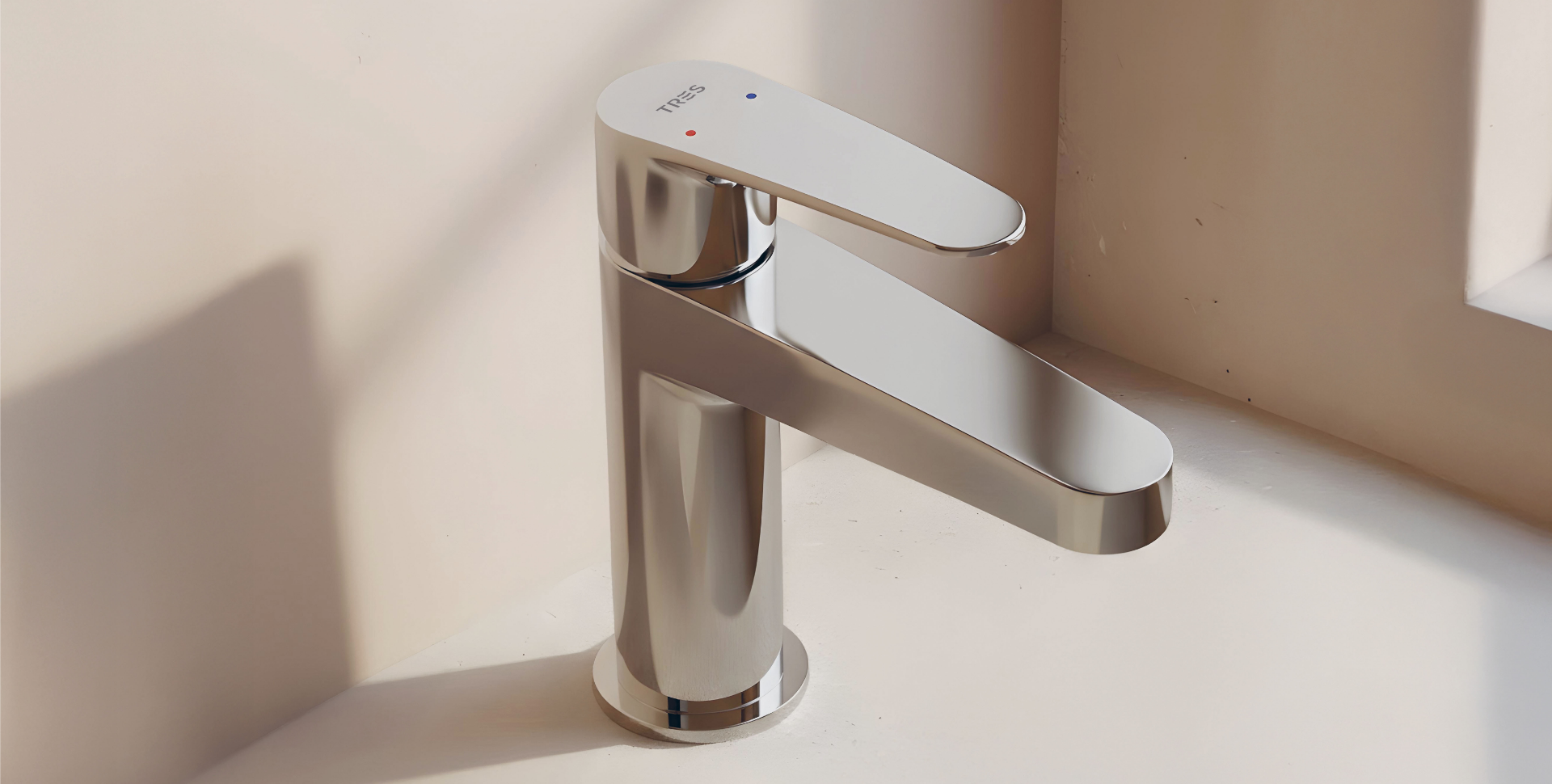
Chrome plating is one of the most widely used finishes in taps and fittings. Its characteristic shine, durability and ease of maintenance have made it a timeless choice for both bathrooms and kitchens.
At first glance, all chrome-plated taps seem the same.
However, behind that shine lies a complex industrial process that often goes unnoticed. And within that process there is an important difference: not all chrome finishes are produced in the same way.
Today, two main technologies coexist in the industry to achieve this finish:
- Hexavalent chromium (Cr⁶⁺)
- Trivalent chromium (Cr³⁺)
Although the visual result may appear similar, the manufacturing process, environmental impact and regulatory compliance are very different.
Traditional chrome plating: hexavalent chromium
For decades, industrial chrome plating has largely been carried out using hexavalent chromium (Cr⁶⁺), a technology capable of producing highly resistant chrome finishes with the characteristic shine associated with taps and fittings.
However, hexavalent chromium is now subject to increasingly strict regulation in Europe, particularly under the REACH regulatory framework, due to its potential risks to health and the environment.
This regulatory pressure is driving the sector towards a progressive evolution to safer chrome plating technologies, such as trivalent chrome plating.
The industry’s evolution: trivalent chrome plating
In this context, trivalent chromium plating (Cr³⁺) has emerged as a technology capable of achieving the same bright and durable finish associated with chrome, but through a process that is safer for people and has a lower environmental impact.
Trivalent chrome plating allows manufacturers to:
- Reduce the environmental impact of the production process
- Improve safety in industrial environments
- Comply with current and future European regulations
- Maintain the durability and resistance of chrome finishes
Implementing this technology, however, is not simply a technical adjustment. It requires adapting galvanic lines, making significant industrial investments and maintaining full control of the production process.
For this reason, only a limited number of companies in Europe have fully completed this technological transition.
Cr³⁺ vs Cr⁶⁺: a difference that goes beyond the finish
- Trivalent chromium (Cr³⁺): a process more aligned with European regulations, with lower environmental impact, improved industrial safety and better preparation for future regulatory requirements.
- Hexavalent chromium (Cr⁶⁺): a historically widespread technology, but one that is increasingly subject to regulatory pressure and environmental and compliance risks.
The difference is not only in the final shine. It lies in the technology behind the process, its impact on production and a company’s ability to anticipate the standards the industry will require tomorrow.

Tres’ industrial transition
At Tres, we have made the necessary investment to replace hexavalent chrome plating with trivalent chrome plating (Cr³⁺) in our production processes.
This is not a superficial improvement but a profound industrial transformation that has involved:
- Adapting our galvanic lines
- Specific technological investment
- Full in-house process control
- External validation through an independent laboratory
This transition forms part of a clear strategic decision: to anticipate the regulatory evolution of the sector and move towards more responsible manufacturing processes that are prepared for the future.
A responsible chrome finish, certified
To validate the resistance of the finish, Tres’ trivalent chrome plating has been tested by the independent laboratory Applus+, one of Europe’s leading technological testing centres.
The test carried out was an AASS (Acetic Acid Salt Spray) accelerated corrosion test in accordance with the UNE-EN 248:2003 standard, with a total duration of 120 hours.
The result was full compliance with no failures, confirming that trivalent chrome plating maintains the level of resistance required for taps and fittings even under intensive testing conditions.
This demonstrates that it is possible to combine environmental responsibility and technical performance within the same industrial process.
In-house manufacturing: the key to process control
Carrying out this type of technological transition is only possible when a company has real control over its production process.
Tres manufactures under a model of 100% European in-house production, which allows us to ensure:
- Quality control at every stage of the process
- Full traceability of every component
- Consistency between design, engineering and finishing
- Real capacity to adapt to new regulations
This industrial control is what enables the implementation of more advanced technologies without compromising the quality of the final product.
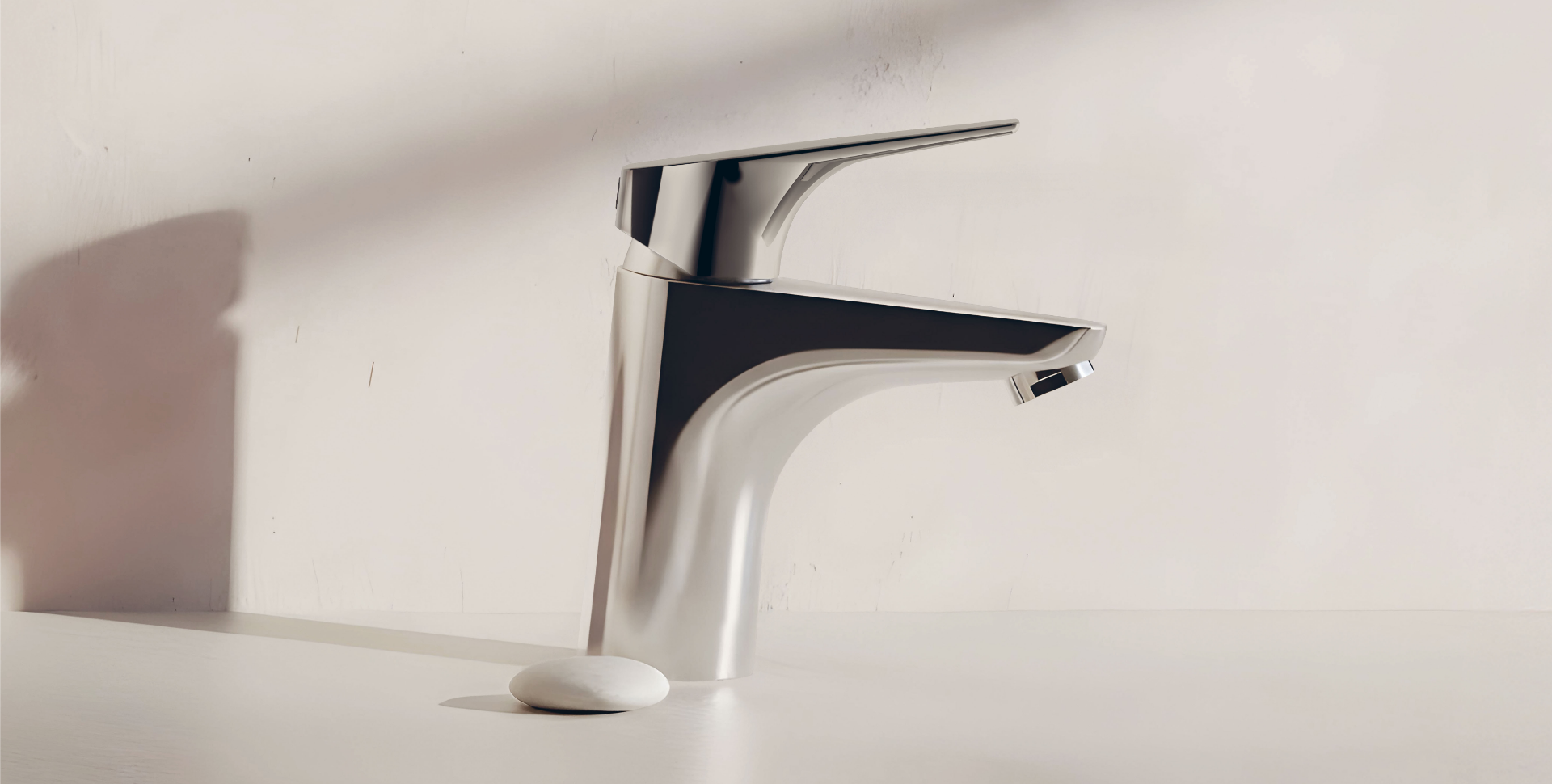
An invisible detail that also speaks of quality
At first glance, two chrome-plated taps may appear identical.
But the process used to create that finish reveals a great deal about the manufacturing standards behind it.
Trivalent chrome plating not only maintains the shine and durability of traditional chrome. It also reflects a way of manufacturing that is more responsible, safer and prepared for the future of the industry.
Because today, in contemporary bathroom design, quality is not only visible.
It is also defined by how things are made.